
When I Last Hugged My Only Child: Thoughts for Parents and Friends
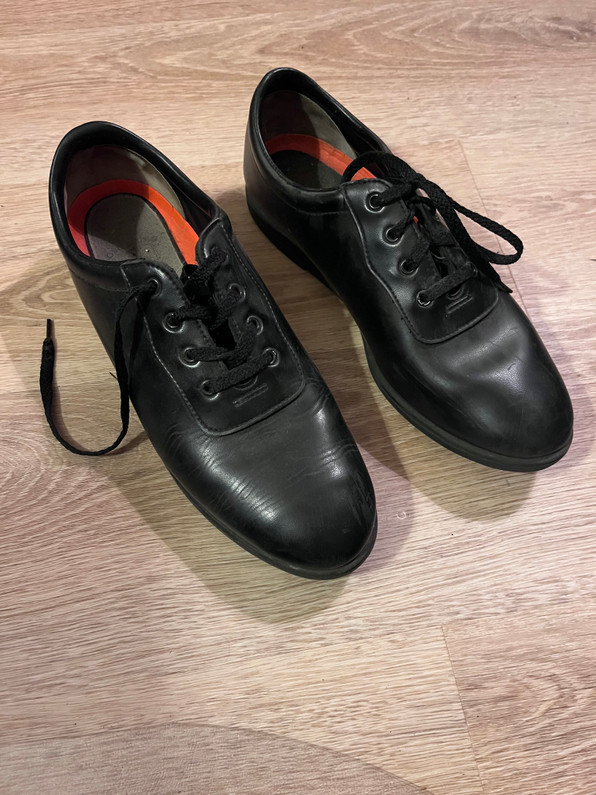
Photo: Kevin's HS Band Shoes, 2008
By Paula Neidorf
My world changed forever seven and a half years ago when my only child died.
Kevin was 28 years old—bright, compassionate, gifted, funny, and always eager to help those in need. To say that life changed would be an understatement. As so many bereaved parents have written, there is the BEFORE and the AFTER.
Many parents choose to have one child; for others, nature makes that decision. For us, it was by choice. We loved being a family of three. I was 40 years old, an established career woman, when Kevin was born. Yet none of us ever felt our family was incomplete. Our lives were rich with love, laughter, and shared experiences.
In January 2019, Kevin died in a tragic kayaking accident near Portland, Oregon. He was just 28 years old.
The trauma of losing a child is beyond words. It permanently alters every part of a parent's life.
I write this not to compare one loss to another, because grief is never a competition. But there are distinct challenges faced by parents whose only child has died, and I hope to shed some light on those differences—for both bereaved parents and the friends and relatives who love them.
Life continues for everyone else. The world keeps turning.
But for us, time seems to stop on every birthday, every holiday, every family tradition, and every milestone we once celebrated with our only child.
I am no stranger to grief. My father died at 43 when I was 19. My husband's three brothers died at ages 57, 57, and 34. A nephew who was especially close to Kevin died at 26, just two years before Kevin. Close friends in their forties, fifties, sixties, and seventies have died, as have our parents and grandparents.
Every one of those losses mattered deeply.
Yet the death of our son is unlike any other loss I have known. It is devastating in ways I never imagined possible.
For parents whose only child has died, there is no longer an active mother or father role. There are no Mother's Days or Father's Days celebrated by a living child. No birthday calls. No holiday hugs. No handwritten cards tucked into the mailbox or left on the kitchen counter.
Sometimes I think about the first time Kevin said, "Mama," and the last time he called me "Mom."
Now there is only silence.
As we age and begin facing our own health challenges, that silence becomes even more profound.
Our world shrinks.
We may no longer be invited as often. Perhaps people worry they will remind us of what we've lost. Perhaps they don't know what to say. Perhaps we declined too many invitations while simply trying to survive.
Whatever the reason, many of us gradually disappear from the lives we once shared with others.
Researchers studying the millions of Chinese parents who lost an only child following the country's one-child policy have described these parents as becoming "socially invisible." Some have even compared them to lepers—not because they are unwanted, but because others often avoid the discomfort their grief evokes.
That description resonates more than I wish it did.
Watching other families continue to grow is bittersweet. Weddings. Grandchildren. Holiday gatherings filled with new traditions.
Our family tree no longer grows.
That pain is difficult to describe to someone who has not lived it.
Many parents of only children save everything.
I still have Kevin's first hairbrush, his baby bottle, preschool drawings, report cards, soccer uniform, awards, notebooks, birthday cards, and boxes filled with Batman figures, Legos, Ninja Turtles, and countless childhood treasures.
I always imagined passing them on one day to his child.
Now I wonder what will become of them.
But even more precious than these possessions are the stories.
The memories.
The little moments that only his father and I still remember—family vacations to Disney World, everyday conversations, and visits with him in Portland, every summer, a place he loved, that welcomed bike riders.
Sometimes all we want is for someone to ask about him.
To hear his name spoken.
To know he is remembered.
It truly is a heartbreak no parent should ever endure.
Support groups can be lifesaving, but parents whose only child has died often find themselves sitting beside people who lovingly talk about their surviving children and grandchildren. Their happiness is genuine and deserved, yet it quietly reminds us of what no longer exists in our own lives.
Sometimes we simply don't fit anywhere.
When someone shares a story about Kevin or casually mentions his name, it is an extraordinary gift.
Those moments are rare.
For me, my most cherished identity was being Kevin's mother. His death did not erase that love, but it forever changed how I live that role.
So what can friends and family do?
Please understand that I may often feel alone. You don't need to fix me. Just listen.
Please say my child's name.
Share a memory if you have one.
Keep inviting me, even if I often decline. The invitation itself reminds me that I have not been forgotten.
Understand that I have no children or grandchildren to soften the difficult days or create new family traditions.
Please don't take it personally if I avoid holiday gatherings centered around families with children.
A simple text saying, "Thinking of you today," especially on anniversaries, birthdays, Mother's Day, Father's Day, or the holidays, means more than you may ever know.
Please don't offer advice unless I ask for it. Instead, ask what I need—or simply show up.
Many parents of only children stay home on holidays. Others travel somewhere they can be anonymous. Some avoid telling strangers they had a child because they cannot bear witnessing the shock and sorrow that often follows.
The old me is not coming back. I am a different person now.
These are not rejections of other people.
They are ways of surviving.
Over time, I have learned to set boundaries, recognize my limits, and find purpose in helping others.
I immersed myself in grief education, support groups, therapy, and writing. I earned two grief certifications and now mentor parents who, like me, have lost their only child.
Some friends have questioned why I continue to study grief. They believe I spend too much time focused on it.
My answer is simple:
When you lose your child—your only child—come back to me.
Then we can have a conversation about how you found your way forward and the struggles that continue.
Every grieving parent is trying to learn how to walk again.
For me, it often feels like trying to put on one last pair of shoes that no longer fit—too tight in some places, too loose in others—yet they are the only shoes I have left for this journey.
So I keep walking.
One step at a time.
About the Author