Living With Suicide Loss: A Survivor’s Perspective Decades Later
By Nan Zastrow
AUTHOR’S NOTE:
Every fall, communities across the USA hold vigils and participate in the Out Of Darkness or Suicide Prevention walks, to raise awareness and break the stigma of suicide. My husband and I proudly served on the Suicide Task Force for the same reasons.
Three decades have passed since my son’s death by suicide, but my thoughts about my son’s death have not waivered. However, my perspective and what I’ve come to accept has. Death by suicide is complex and the victim may not follow any particular pattern. In this article, I revisit my past but also include moments of healing hope that evolved through my experience.
Not every suicide comes with warning signs. Some families are left with a loss that feels sudden, confusing, and impossible to explain. More than a decade ago, my husband Gary and I spoke at a National Compassionate Friends conference about suicide. We titled our presentation: ASK ME…I’m Not Afraid to Talk About Suicide. We wanted to give words to something many grieving families already knew in their hearts: Sometimes there are no clear signs, no known mental health history, and no chance to step in to prevent a death by suicide. Afterward, a couple told us that our words helped them feel less helpless in the death of their son. For the first time, they felt understood instead of judged.
Suicide happens with or without warning. Either way, the impact on families and friends is often not talked about. In 1993, when our son died by suicide , the subject was considered taboo and seldom acknowledged publicly. Families affected were often avoided, and whispers of “Did you hear?” were spoken quietly.
Friends offered their sympathy without eye contact. They often reacted with solemn confusion, stunned and unable to explain the tragedy either. Some family and friends feared using the word “suicide” and instead used protective euphemisms while we all silently wore a cloak of shame.
My husband and I came to understand suicide as something not to be feared into silence, but explored, understood, and, whenever possible, prevented. Through what we learned, we found that suicide was often described in broad categories, usually tied to mental illness, instability, or obvious risk. There seemed to be little room for the kind of death that comes without warning, especially when a person does not appear to fit those expectations. Our experience told us there was more to understand. Ten weeks after Chad’s unexpected death, his fiancée took her life, too. The two deaths were painfully different—one sudden and without warning, the other more clearly planned. Yet both left families stunned, wounded, and trying to understand how to go on.
Being a survivor of suicide (SOS)
I have never fully connected with the phrase “survivor of suicide,” though I understand why people use it. To survive means to keep living after something terrible has happened. But after Chad died, survival meant more than simply getting through each day. It meant learning how to live with shock, questions, guilt, and the stigma that often surrounds suicide. We had to find our way through grief while also facing the reactions of people who did not know what to say or how to help. Slowly, we began to understand that surviving this kind of loss means carrying both sorrow and love forward.
In those early days, we searched for answers the way many families do. We tried to understand how someone we loved so deeply could be gone so suddenly. We knew that something in Chad’s life had gone terribly wrong. That kind of feeling brings its own pain. Whether or not there are signs, families can spend years asking “why?” and still never find any answer that justifies incredible loss.
Chad’s Life at the Time of His Death
At the time of his death, Chad’s life looked much like that of many 21-year-old young men with a future ahead of them. He had a full-time job, lived in a rented apartment, and was engaged to be married. He volunteered with a local fire department and was going to school to become an EMT. Chad paid his taxes just two days before he died, sent roses to his fiancée, and put a new fishing pole on layaway at a local store. A few weeks earlier, he had made plans to move back home so he could save money for the fishing boat he wanted. One of his commanders in the Army National Guard later told us that Chad had been teasing and joking with them during a training maneuver just weeks before. He loved fishing, hunting, and outdoor sports. These were signs of a young man living his life—not signs of someone preparing for his death. We spoke with him the evening before he died. He had received permission to miss a National Guard drill so he could attend EMT training on the jaws of life. He sounded excited and happy, and his future looked bright. Only hours later, we received the call that changed our lives forever.
Changing the Perception of Suicide
Yes, we survived—but survival was only the beginning.
I wanted to make clear that not every suicide begins with a long-held intent to die. Sometimes fear and the absence of hope can narrow a person’s thinking until death feels, in that moment, like the only escape. That fear may be real or imagined. It may be tied to relationships, health, danger, money, work, identity, dread, or something no one else can see. When hope is lost, the future can feel impossible to reach.
I do not mean to suggest that an unplanned suicide is easier to accept than one that was planned. Any death by suicide is devastating for those left behind. My hope is simply to make room for a broader understanding—that suicide should not be reduced to a single explanation or viewed only through the lens of judgment, selfishness, or serious mental illness. Every person has a unique story that deserves to be told with compassion and respect. If that story could be fully known, I believe we would respond with sympathy for the person’s suffering and with the wish that their pain could have been eased before it was too late.
Living With Hope –Three Decades Later
Over time, our family learned to live with the word suicide in a different way. What matters most now is not the manner of Chad’s death, but the life he lived—the goodness he carried, the love he gave, and the person he was to those who knew him. The shadow that once followed me has softened with time. After a suicide, it can be easy for others to remember the death before they remember the person. Yet no life should be reduced to one final moment or defined by a word that can carry shame, judgment, or misunderstanding.
This article is written with other survivors in mind—those who carry guilt, who wonder what they should have seen, and who continue searching for answers that may never fully come. I am sorry you did not know. We didn’t know either. Chad’s death was sudden and unexpected, and in many ways, it remains a mystery.
Today, I hold the pain differently. I feel grateful to have moved beyond the private stigma I once carried. In many ways, my grief is not unlike the grief of anyone who has lost someone deeply loved. We are all survivors in our own way.
Suicide is death by another name. It reaches across age, income, education, religion, and circumstance. It may be planned, triggered, aggravated, sudden, or without warning. Sometimes one brief moment changes countless lives forever.
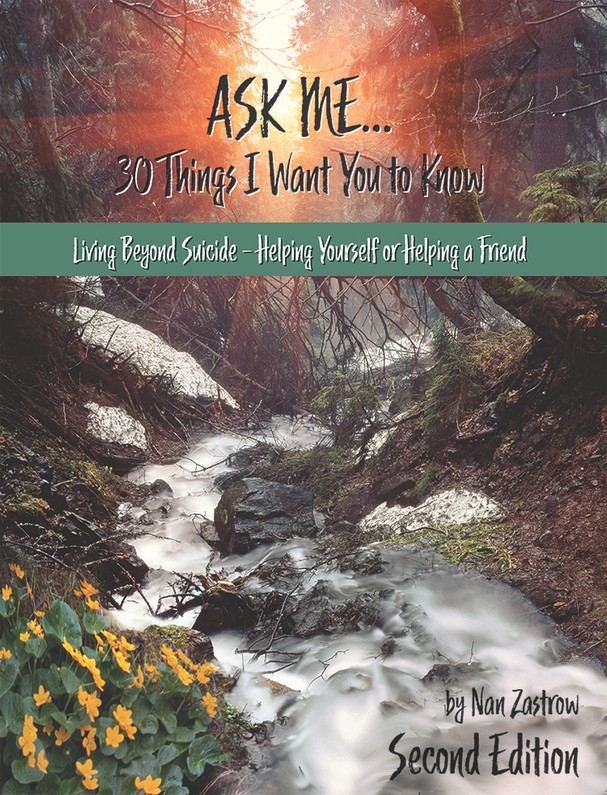
Final Note:There are some excerpts in this article from other articles I’ve written about suicide. Visit https://www.wingsgrief.org (Articles by Nan Zastrow) Nan is the author of ASK ME-30 Things I Want You to Know -Helping Yourself or Helping a Friend-Second Edition.